
 EN
 Italiano
 Français
 Deutsch
 Español
No products in the cart.
Notizie
How much are my Pokémon cards worth? A step-by-step check
⚡ Quick answer
To find out how much your Pokémon cards are worth, identify each card exactly (set, number, edition, language), judge its condition honestly, then compare it with sold listings for the same card in the same condition, never with asking prices. Most cards from packs, old or new, sell for small sums. The ones worth a closer look are early holographic cards, 1st Edition and Shadowless Base Set cards, rare promos and modern “alternate art” or special illustration cards in excellent condition. For a card that could be valuable, professional grading by a company such as PSA, Beckett or CGC is what really sets the price.
You found an old binder in the attic, or your kids have a shoebox full of packs from the last few years, and the question comes up: how much are my Pokémon cards worth? Headlines about cards selling for millions make it tempting to hope, but the real answer depends on a few precise details that you can check yourself at the kitchen table.
This guide shows you how to identify your cards, which features make a card valuable, and how to look up what similar cards have actually sold for in the U.S. market.
Start here: most cards are worth little
Pokémon cards have been printed by the billions, and the vast majority of commons and uncommons, from the 1990s as well as from today, are worth very little on their own. That is not bad news: it simply means you should spend your time on the few cards that stand out, instead of trying to price every single one.
At the other end of the scale, the record is extraordinary: a Pikachu Illustrator graded PSA 10 sold at Goldin for $16,492,000 on February 16, 2026, and a 1st Edition Base Set Charizard in PSA 10 sold on eBay for just over $1 million in September 2026. Those are exceptional cards in perfect condition: they tell you what is possible, not what your binder is worth.
Read the card: number, symbols and edition
Every card carries the information you need to identify it:
- Collector number (for example 4/102), usually in the bottom corner. It tells you which card it is within the set.
- Rarity symbol next to the number: a black circle means common, a black diamond uncommon, a black star rare. A star with the word PROMO marks a promotional card.
- Set symbol and copyright line: they tell you which expansion and which year.
- Holo or not: on a holo card only the artwork box is shiny; on a reverse holo the foil covers the rest of the card. Classic holos are much harder to pull.
- Edition: on the earliest English sets, a small black “Edition 1” stamp on the left, below the artwork, marks a 1st Edition card.
- Language: English, Japanese and other versions are separate markets with different prices.
With the set, the number and the version in hand, you can search for the exact card rather than “Charizard” in general.
Which Pokémon cards are worth money
| Type of card | What to look for | Worth checking? |
|---|---|---|
| Base Set, Jungle, Fossil holos (1999-2000) | 1st Edition stamp, “Shadowless” print, sharp corners | Yes, especially Charizard and other popular Pokémon |
| Commons and uncommons (any year) | Circle or diamond symbol, no foil | Usually not, unless 1st Edition in top condition |
| Modern alternate art and special illustration cards | Full-card artwork, number above the set total (e.g. 215/203) | Yes: some sell well, especially in perfect condition |
| Promos and event cards | PROMO star, stamps, tournament or contest prizes | Case by case: rare prizes are very valuable, common promos are not |
| 1999 Burger King gold cards | Box, Poké Ball and certificate still present | They are collectibles, not game cards: check sold listings |
The “gold Pokémon cards”
Many people search for the value of their gold cards. The best-known are the six 23-karat gold-plated metal cards sold by Burger King from November 1999 for $1.99 with a kids’ meal: Charizard, Jigglypuff, Mewtwo, Pikachu, Poliwhirl and Togepi. Each came in a plastic Poké Ball inside a box, with a certificate of authenticity. They are not part of the trading card game, and copies complete with box, ball and certificate are the ones collectors look for. Modern “gold” cards found in packs are a different thing: they are secret rares and are priced like any other card from their set.
Condition: the factor that changes everything
Two copies of the same card can be worth very different amounts. Look at each card under good light:
- Corners: sharp or rounded, white wear on the back.
- Edges: chips or white spots along the border.
- Surface: scratches on the holo, dents, creases, stains.
- Centering: are the borders even on all four sides?
A card kept in a sleeve since the day it was opened is in a different league from one that spent years held together with a rubber band. A single crease can cut the value of a desirable card dramatically.
Where to check real prices
- eBay sold listings: search for the exact card, then turn on the “Sold items” filter. Look at several sales, in the same condition and the same grade.
- Auction archives: major U.S. auction houses such as Heritage and Goldin publish past results for important cards.
- Grading company data: PSA publishes a population report (how many copies have received each grade) and auction price data for graded cards.
- Price guides and apps built on completed sales are useful for a quick first pass, but always double-check a promising card against recent sold listings.
Prices move quickly, especially for modern cards: a figure from two years ago may be far from today’s market.
Should you get your cards graded?
Grading companies such as PSA, Beckett and CGC authenticate the card, give it a grade from 1 to 10 and seal it in a hard plastic case (a “slab”). A high grade can multiply the value of a sought-after card.
Grading has a cost: even the cheapest service levels run to several tens of dollars per card, plus shipping, and fees and turnaround times change often, so check the grading company’s website before sending anything. In practice, grading makes sense only for cards that are both valuable and in excellent condition.
Value your collection in 7 steps
- Sort the cards into holos, rares and promos on one side, commons and uncommons on the other.
- Pull out the vintage cards (1999-2003) and check for the 1st Edition stamp and the Shadowless print.
- Write down set, number, version and language for every card worth a second look.
- Grade the condition yourself honestly: corners, edges, surface, centering.
- Look up sold listings for the same card in the same condition, and note the date of each sale.
- Protect the best cards right away in a sleeve and a rigid holder.
- Ask an expert (a grading company, a card specialist or an auction house) before selling a card that seems valuable.
Mistakes to avoid
- Using asking prices. Anyone can list a card for $10,000. Only completed sales show the market.
- Pricing “a Charizard” instead of your Charizard. Set, edition, language and condition all change the value.
- Cleaning, pressing or trimming cards. Graders spot it and it lowers the grade or makes the card ungradable.
- Trusting a stamp alone. Fake 1st Edition stamps exist: check the other details and, for valuable cards, get them authenticated.
- Grading everything. On common cards the fee is often higher than the card’s value.
- Selling the whole box in a hurry without checking the few cards that could matter.
To show your graded cards dust-free: wood and glass display cases for 1, 8 and 12 graded cards, handmade in Italy, for PSA, CGC, TAG, BGS and SGC slabs.
Frequently asked questions
How do I know if my Pokémon cards are worth money?
Check the rarity symbol, look for holos, 1st Edition stamps and special illustration cards, then compare each one with recent sold listings for the same card in the same condition.
Are old Pokémon cards worth anything?
Some are. Holos from the first sets, especially 1st Edition and Shadowless prints in excellent condition, are sought after. Old commons and uncommons are usually worth little.
How much is a Charizard card worth?
It depends on which Charizard. A 1st Edition Base Set Charizard in PSA 10 sold for just over $1 million in September 2026, while many modern Charizard cards sell for a few dollars. Identify yours and check sold listings.
Are gold Pokémon cards worth anything?
The 23-karat gold-plated cards from the 1999 Burger King promotion are collectibles, not game cards. Complete examples with box, Poké Ball and certificate are the most sought after: check recent sold listings.
What is the best way to see how much my Pokémon cards are worth?
Use eBay’s “Sold items” filter and the archives of the big auction houses, and compare cards in the same condition. Apps are handy for a first look, but recent sales are the reference.
Is there an app to check Pokémon card prices?
Several apps scan cards and show prices based on past sales. Use them to sort your collection, then verify any promising card against recent sold listings.
Is it worth grading my Pokémon cards?
Only if the card is both valuable and in excellent condition. Grading costs at least several tens of dollars per card, so it rarely pays off on common cards.
Are Japanese Pokémon cards worth more?
Not automatically. Japanese and English cards are separate markets: some Japanese cards are very valuable, others are not. Always compare with sales of the same language version.
What is the most valuable Pokémon card?
The Pikachu Illustrator: a PSA 10 copy sold at Goldin for $16,492,000 on February 16, 2026, a Guinness World Record.
Who can tell me what my cards are worth?
A grading company, a trading card specialist or an auction house. Coins&More does not provide valuations and does not buy cards.
Keeping graded cards safe
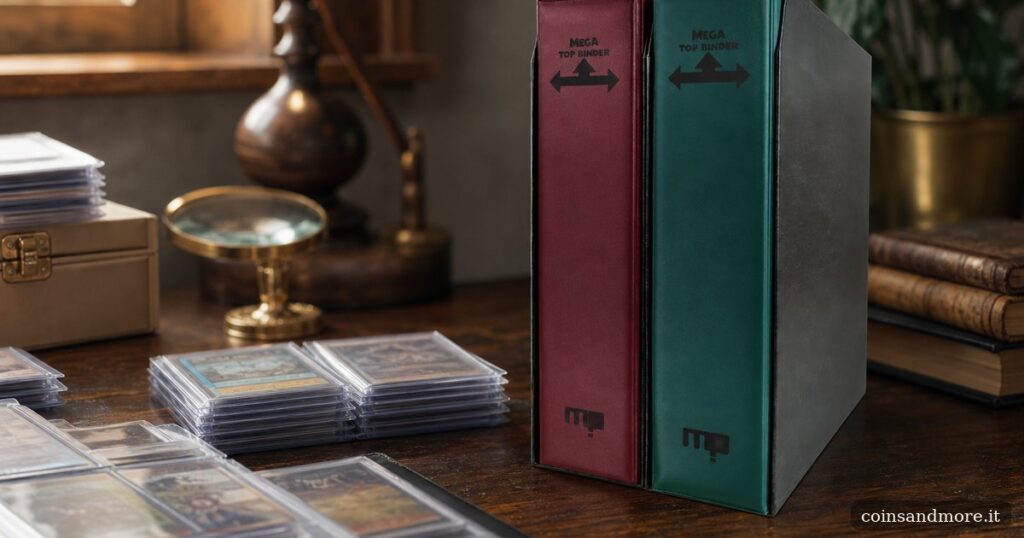
If you send your best cards for grading, a binder for graded cards keeps the slabs organized and protected.

Go deeper
The complete guide on this topic, as an instant digital download. Original price was: 14,99€.9,99€Current price is: 9,99€.
See the guide →Coins&More newsletter
Enjoyed this article? Get the next ones by email
News from our workshop, subscriber-only promotions and tips for your collection. Welcome discount voucher, zero spam.
Join the newsletter →