🚗 In this guide: how to recognise valuable diecast models, distinguish scales 1:18, 1:43 and 1:64, identify original Hot Wheels Redlines, understand the value of a Corgi James Bond and avoid the most common fakes.
They were toys. Now they are investments. A 1968 Hot Wheels Redline Custom Camaro, the first ever produced by the brand, has gone from a few cents to thousands of euros at specialist auctions. A 1965 Corgi Aston Martin DB5 James Bond in its original intact box is worth €500–800 today. And Burago Ferrari models in 1:18 scale, produced since 1976, are conquering an increasingly mature collectible market. But navigating this universe requires knowledge, a good eye and method.
🏛️ The history of diecast: from toy to collectible
The term “diecast” refers to the pressure-casting production process: zamac (an alloy of zinc, aluminium, magnesium and copper) is poured into precision moulds to obtain detailed miniatures. The story starts in 1934 with Dinky Toys, continues with Matchbox in 1953, then Corgi in 1956, Hot Wheels in 1968 and Burago in 1976. Each brand brought innovations: Corgi models with visible interiors, Hot Wheels with fast wheels and bold colours, Burago the 1:18 scale with museum-quality details.
📊 Scales: what changes between 1:18, 1:43 and 1:64
Scale defines the ratio between the model and the real car and is the first valuation criterion for every collector:
- 1:18 scale (~25 cm): the most detailed. Opening doors, hood and boot, reproduced engine, complete interiors. Burago, AUTOart, CMC and Minichamps produce the finest pieces. Average cost from €30 to €500+ for luxury pieces
- 1:43 scale (~10 cm): the preferred format of European historic car collectors. Eligor, Solido, Minichamps often produce numbered models. Compact and easy to display in a cabinet
- 1:64 scale (~7 cm): the Hot Wheels and Matchbox format. Low entry cost, but special editions and Treasure Hunts can be worth hundreds of euros
💎 Hot Wheels Redlines: the Holy Grail of diecast
From 1968 to 1977, Hot Wheels produced the so-called Redlines, recognisable by the red stripe on the tyre wall. They are among the most sought-after diecast models in the world. To identify an original Redline:
- The red stripe on the side of the tyre, clean and uniform
- Heavy metal body: an original Redline is noticeably heavier than a modern replica
- Country code stamped underneath: “Made in USA” or “Made in Hong Kong” depending on the year
- Spectraflame colour: the translucent iridescent paint of 1968–72 is impossible to replicate perfectly with current technology
The rarest models like the Pink Rear-Loading Beach Bomb or non-standard colour variants have reached over $100,000 at American auctions.
🕵️ How to spot fakes in diecast models
The replica market, especially for Hot Wheels and Burago, is very well developed. Signals to check:
- Weight: quality original diecasts are heavy; Chinese replicas use thinner, lighter alloys
- Finish quality: sharp edges, paint bubbles, crooked decals are signs of a replica
- Base markings: an original always has the brand, model number and country of production clearly stamped and readable
- Packaging: the original box graphics are printed on thick cardboard with uniform colours; replicas use thin cardboard with faded colours
✅ What works / What doesn’t work in diecast collecting
What works: buying MIB (Mint In Box) with intact original packaging, focusing on historic brands (Corgi, Dinky 1960s–70s, Hot Wheels Redline), seeking numbered editions and Treasure Hunts, storing in closed cabinets away from direct UV light, always verifying provenance before an important purchase.
What doesn’t work: removing from the original box thinking it increases value (it does the opposite), buying without checking the correct scale, storing in places with variable humidity (zamac metal suffers from “zinc pest” — internal corrosion), trusting a low price as a guarantee of a bargain.
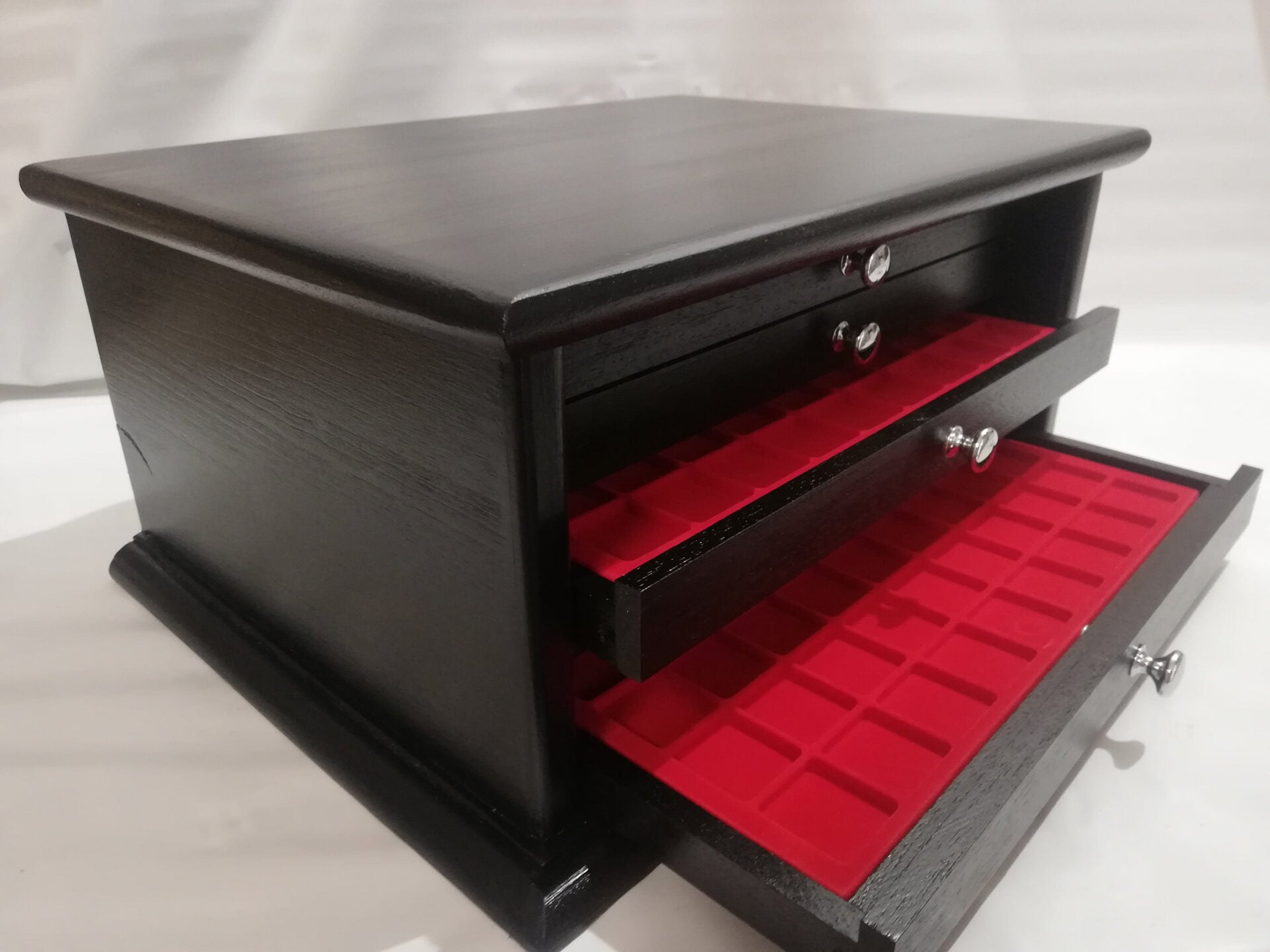
📦 Professional preservation of diecast models
The value of a diecast depends 60% on its condition. The fundamental rules:
- Closed UV-filtered cases for display pieces: direct sunlight fades paint within a few years
- Stable humidity between 40 and 55%: excess causes internal zamac corrosion (zinc pest), an irreversible damage
- Never remove from the box valuable MIB models: intact original packaging can be worth 50–100% of the model’s own value
- Cotton gloves when handling pieces: fingerprints leave acidic residues that damage paint over time
❓ FAQ — Frequently asked questions about collectible diecast models
What does MIB mean for a diecast model?
MIB stands for “Mint In Box”: the model is in perfect condition and has never been removed from its original packaging. It is the most sought-after condition on the collectible market and the one that guarantees the highest value. MOC (“Mint On Card”) refers to models attached to a blister card.
Which 1:18 diecast brands have the greatest collectible value?
AUTOart, CMC (Classic Model Cars) and Minichamps produce the most valued pieces in the luxury 1:18 segment, with models exceeding €300–500. Burago is excellent for value-for-money. Bburago Heritage and Welly offer good replicas at accessible prices for beginners.
How do I know if my model is rare?
Look up the catalogue code under the model and compare it on the Diecast Database or Hot Wheels Wiki. Special editions, non-standard colour variants and prototypes that never entered production are always the rarest. The Ramsay’s guides for British diecasts are the historical reference for Corgi and Dinky.
Where to sell valuable diecast models?
eBay is the most liquid platform for the international market. Catawiki organises themed auctions with European buyers. Specialist fairs (Verona, Milan, Nuremberg) allow direct sales with immediate valuation. For high-value pieces (over €500), auctions like Vectis Auctions in the UK reach the most serious collectors.
What is “zinc pest” and how is it recognised?
Zinc pest is internal corrosion of zamac caused by excess humidity and impurities in the alloy. The model begins to swell, deform and ultimately crumble from within. It is irreversible and completely destroys the piece. It is prevented by storing models in environments with stable, controlled humidity.
📖 Find the complete guide here
Looking for a display case, custom stand or professional storage solution for your diecast collection? Visit our shop — we create preservation and display solutions for every type of collection.