
 EN
 Italiano
 Français
 Deutsch
 Español
No products in the cart.
Notizie
Graded Card Display Case: How to Display PSA Slabs
⚡ Quick answer
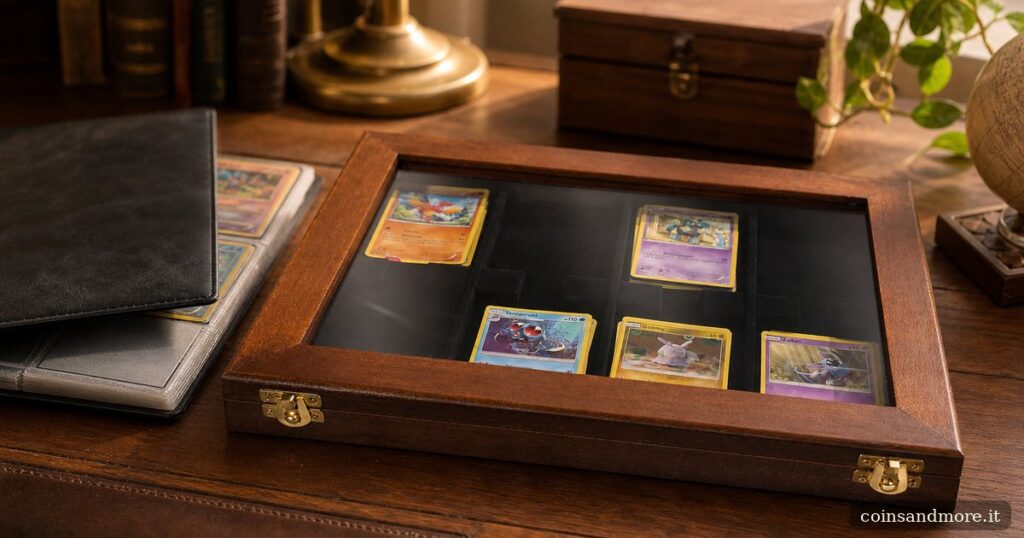
The right graded card display case depends on how many slabs you own and where they will live. For two or three PSA or BGS slabs, a clear acrylic stand on a shelf away from windows is enough. A growing collection needs a binder with slab pages. To show off your best cards dust-free, pick a closed display case or cabinet on an inside wall. The slab protects the card from fingers and dust, but not from sunlight or a fall. For a selection you want on show every day, there is also our wood and glass display case for 1, 8 or 12 graded cards.
How to display graded cards: the options compared
If you collect Pokémon, Magic, Yu-Gi-Oh! or sports cards, sooner or later your best pulls go off for grading. They come back sealed in a hard plastic holder with a grade and a cert number, and the next question is always the same: where do I put them? A good graded card display case has two jobs. It lets you enjoy the card, and it protects the slab, which is part of what the card is worth.
There are four main options, and most collectors end up using more than one: a few favorites on display, the rest stored away. Here is how they compare.
| Option | Best for | Dust | Light | Downside |
|---|---|---|---|---|
| Single acrylic stand | 1-5 slabs on a desk or shelf | No | Depends on placement | Easy to knock over |
| Binder with slab pages | Dozens of slabs to store and flip through | Yes | Yes, when closed | Not on display |
| Wooden case with glass lid | A curated set of key cards | Yes | Partly | Must fit your holders |
| Wall or cabinet display case | Collections you want guests or customers to see | Yes | Depends on the wall | Space and placement |
A simple rule of thumb: what you look at every day goes on display; what you bought as a long-term hold goes in storage, in the dark.
What is a PSA slab, and why it isn’t bulletproof
A graded card has been examined by a grading company such as PSA, Beckett (BGS) or CGC and given a grade, usually on a 1-10 scale. It is then sealed in a clear rigid holder, the “slab,” with a label showing the grade and a certification number. The grade drives the price: a PSA 10 can sell for many times the same card in a lower grade.
That is why you should treat the slab as part of the card. A scratched, cracked or tampered holder is the first thing a buyer will notice. Slabs are great against dust, fingerprints and bends, but they have three weak spots that any display needs to handle:
- Light. Clear plastic lets light through. Direct sunlight can fade the card and the label over time.
- Scratches. Slabs that rub against each other, or sit face down on rough surfaces, get scuffed, and scuffs show up in every photo.
- Drops. A slab that falls off a shelf can chip at the corners. The card usually survives; the holder doesn’t.
Add heat and humidity to the list: no slabs above a radiator, in the basement, the garage or a hot attic.
PSA slab dimensions vs. BGS and CGC
Before you buy any stand or case, grab one of your slabs and measure it. A standard trading card is 63 × 88 mm (about 2.5 × 3.5 in); a slab is much larger, well over 5 inches tall and about 3 inches wide, and several millimeters thick. More importantly, holders from different graders are not the same size. PSA, Beckett and CGC slabs differ in height, width and thickness, and the same company may use a thicker holder for thick cards.
What that means in practice:
- a stand designed around PSA slabs may hold a thicker BGS slab poorly;
- binder pages for slabs are sold by grader format: PSA is one size, Beckett another;
- a case with fixed slots has to be built around your holders, not around raw cards.
If you own slabs from several graders, open shelving inside a cabinet or individual stands are more flexible than fixed slots.
Acrylic stands for your desk or shelf
For a handful of graded cards you want to see every day, an acrylic stand is the simplest and cheapest option. It is a small clear easel that holds the slab upright at a slight angle without hiding any of the card. Put it on your desk, a bookshelf or inside a cabinet you already own.
Our acrylic display stand for card slabs and magnetic holders, selected by Coins&More, is sold individually, so you buy exactly as many as you need. It also works with magnetic one-touch style holders, so graded and raw cards can sit side by side.

Have a great raw card you want to show off the same way? There is also an empty card slab, a rigid clear case styled like a graded holder. Keep in mind it is not a grade and certifies nothing; it only protects and displays. If you ever sell the card, say so clearly.
The catch with single stands is stability. They are perfect in a quiet corner, less so on a shelf within reach of kids, cats or a feather duster. In that case, go for a closed case.
Graded card binders: the archive
Once you have twenty, fifty or a hundred slabs, keeping them all on display stops making sense. You need storage that protects them and lets you find any card in seconds. The most practical answer is a ring binder with thermoformed pages made for slabs.
The MasterPhil MegA TOP BINDER 50 mm graded card binder is built for exactly that: you choose pages by format (PSA, Beckett or AiGrading) and they hold each slab without squeezing it. Closed, the binder keeps your slabs dark and dust-free.
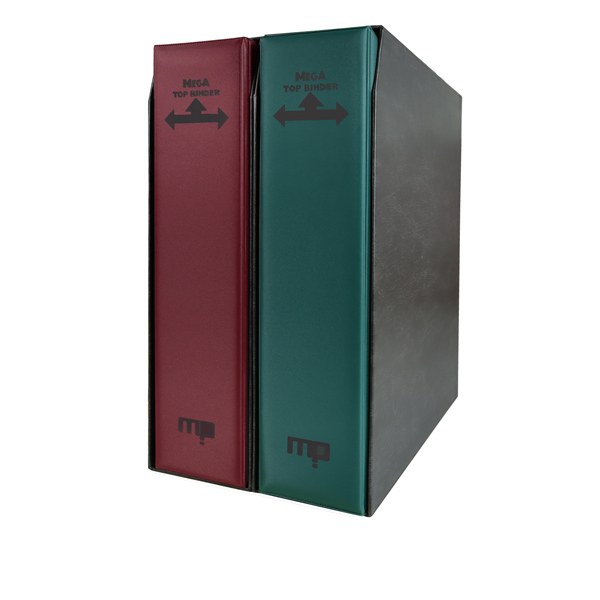
For raw cards in toploaders there is the smaller TOP BINDER 30 mm, with pocket pages for single cards and rigid sleeves. One binder for graded cards and one for cards you plan to submit is a simple system that works.
A large archive also needs a list. Track cert numbers, grades and location (binder 2, page 5) and you’ll never flip through everything again. A spreadsheet works, or software such as our Pokémon + Yu-Gi-Oh! Card Tracker for PC and Mac.
Wood and glass graded card display case: the Coins&More models
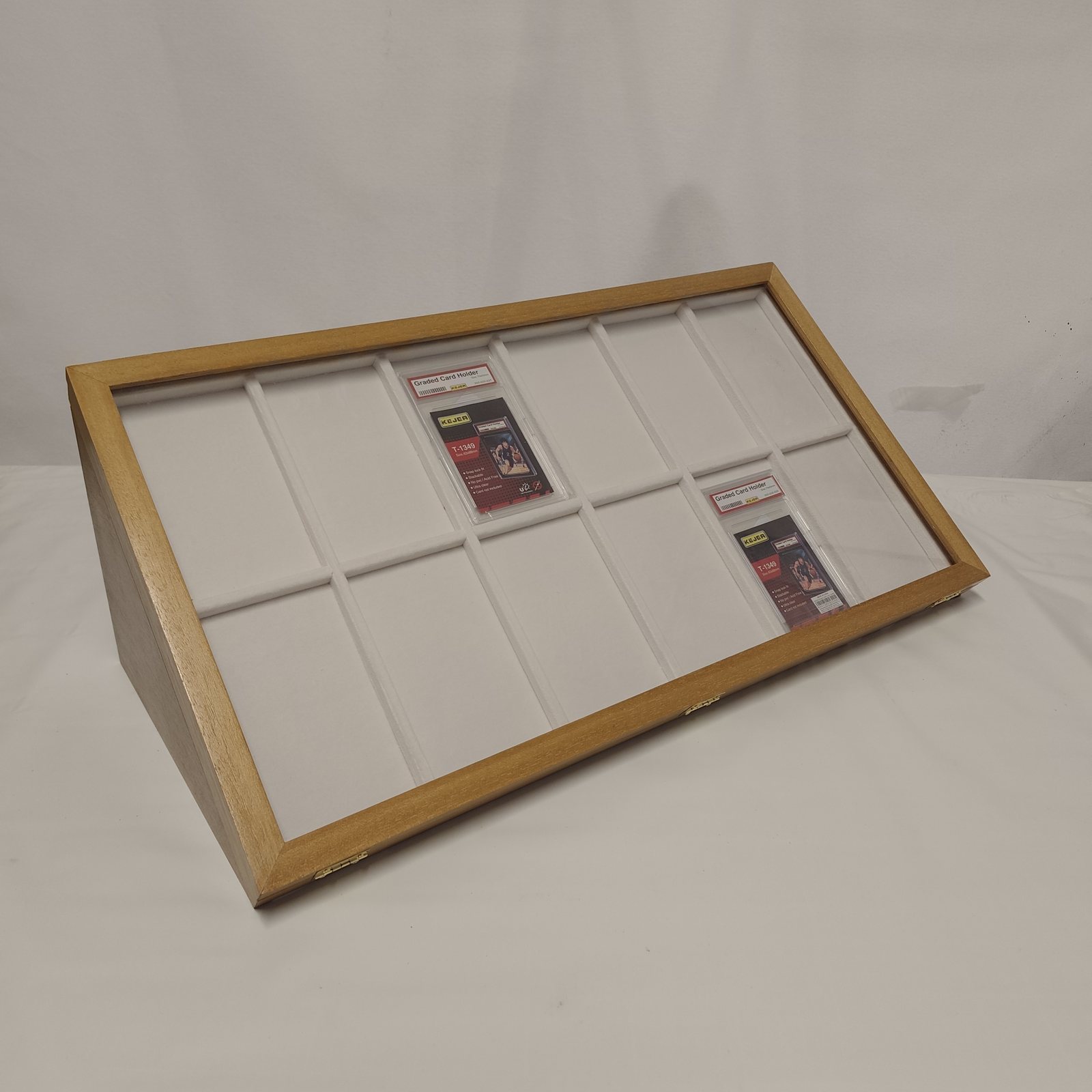
If you want your best slabs on show and protected from dust, the tidiest option is a closed case with a glass lid. In our workshop in Italy we make graded card display cases in three sizes and two finishes: black wood with black velvet, or an oak finish with cream velvet.
| Model | Capacity | Size and weight | Price | Finishes |
|---|---|---|---|---|
| 1-card display case | 1 slab | 18.5 × 12.5 cm (7.3 × 4.9 in) · 1 kg | €79 | Black · Oak |
| 8-card display case | 2 rows of 4, folding tilt stand | 41.5 × 34 cm (16.3 × 13.4 in) · 2.5 kg | €149 | Black · Oak |
| 12-card display case | 2 rows of 6, folding tilt stand | 61 × 34 cm (24 × 13.4 in) · 3.5 kg | €199 | Black · Oak |
Each position gives 15 × 9 cm (5.9 × 3.5 in) of usable space: it takes the main PSA, CGC, TAG, BGS/Beckett and SGC slabs (Thick versions too), magnetic One Touch holders, toploaders and Card Saver-style semi-rigids. It works for Pokémon and other TCG cards, for sports cards and even for standard-size tarot cards. Tallboy and jumbo slabs do not fit: for those we make custom cases.
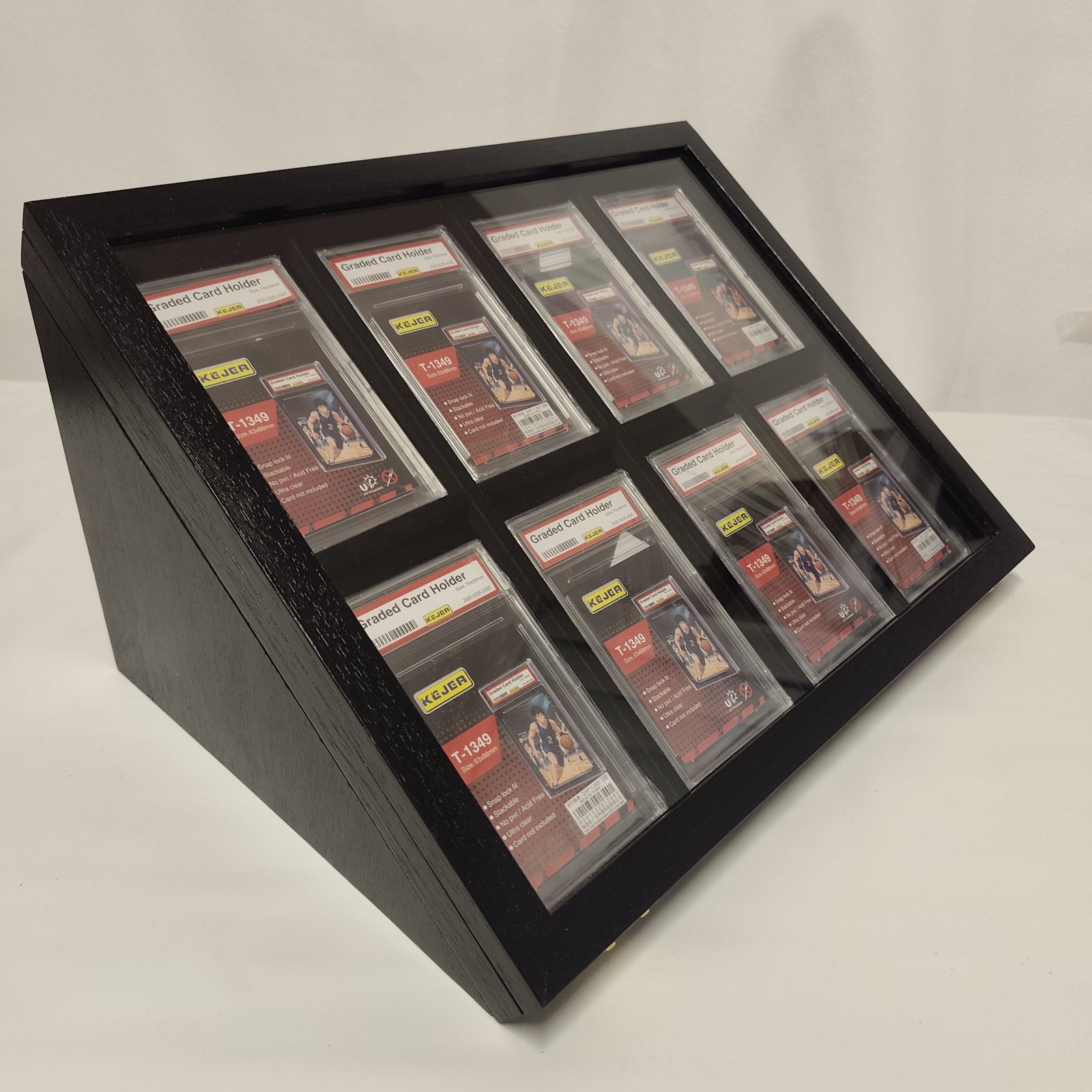
The lid has 3 mm glass and the inside is lined with scratch-free velvet that does not mark the holders. You can pick another velvet colour, and we can engrave a name or a date on the frame. The glass keeps out dust and fingerprints, but it is not a sun filter: keep the case away from direct light.
Graded card display case for the wall
A wall of your best slabs, like a card shop: many collectors dream of it, and it works, as long as you pick the wall carefully. The right wall gets no direct sun at any time of day, is not above a heater or radiator, and is not in a bathroom or kitchen. An inside wall with indirect light is best.
Searches for “graded card display case with lights” and “UV protection” are common. Here is what really matters when you choose a wall-mounted or cabinet display:
- Closure: glass or a door keeps dust out, so you’re not wiping slabs every week.
- Depth: a slab standing on an easel needs a few inches; measure first.
- Mounting: solid shelves that don’t vibrate when a door slams.
- Lighting: if you add lights, use low-heat LEDs and don’t aim a spotlight at close range. For UV claims, check what the manufacturer actually states; placement away from sunlight matters more.
For your best raw cards there is also a wooden option. Our wooden case for Pokémon, Magic and Yu-Gi-Oh! cards is made in the Coins&More workshop in San Giovanni Teatino, Italy, in solid tulipwood and birch, with a glass lid and 8 velvet-lined slots of 10.7 × 7.5 cm (1 cm deep): sized for standard cards, not slabs. Each piece is numbered and comes with a certificate of authenticity. Need a different size, for example for your slabs? The workshop builds custom cases; just send us your holder dimensions. We ship to the US with tracked courier.

How to display graded cards in 6 steps
- Split your collection. Pick the few cards you love to look at; everything else goes to storage.
- Measure your slabs. Height, width and thickness, grader by grader. Write it down before buying stands, pages or cases.
- Choose the spot. Inside wall, no direct sun, no heat source, no humidity. If the room has windows, check where the sun lands during the day.
- Choose the display. Acrylic stands for a few slabs, a closed case for a curated set, a binder for the archive.
- Handle by the edges. Hold slabs by the sides, not the window, and never stack them face to face.
- Catalog and check. Keep a list of cert numbers, grades and locations. Every few months, check for dust and scuffs and rotate what’s on display if you like.
Mistakes to avoid
- The display case by the window. The most common mistake: your best card baking in the afternoon sun.
- Stacking and sliding slabs. A loose pile in a shoebox is the fastest way to scratch them.
- Buying before measuring. PSA, BGS and CGC holders differ; the wrong stand or page holds them poorly.
- A spotlight inches away. Concentrated heat and light are bad for both the card and the label.
- Basement, garage, attic. Humidity and temperature swings reach inside a sealed slab too.
- Harsh cleaners. A soft, dry microfiber cloth is all you need. No alcohol, no glass spray.
- Selling an empty slab as “graded.” It’s a display case, not a grade. Be upfront.
FAQ
What is a PSA slab?
It’s the sealed, clear plastic holder PSA puts a card in after grading. The label shows the card, the grade and a certification number you can look up. Other graders such as Beckett and CGC use their own slabs.
How do you display graded cards at home?
Use acrylic stands for a few slabs on a shelf away from windows, a closed display case on an inside wall for a larger selection, and a binder with slab pages for the rest of the collection.
Is a wall-mounted graded card display case a good idea?
Yes, if the wall gets no direct sun and is away from heat and humidity. Choose a case with glass or a door to keep out dust, with enough depth for slabs standing on easels.
Are PSA slab dimensions the same as BGS?
No. Holders from different graders differ in size and thickness, and thicker cards may come in thicker holders. Measure your own slabs before buying stands, pages or cases.
Do I need a graded card display case with UV protection?
Placement matters most: keep slabs out of direct sunlight and away from close spotlights. If a case advertises UV protection, check exactly what the manufacturer states.
Can you store graded cards in a binder?
Yes, with thermoformed pages made for slabs, such as the MasterPhil MegA TOP BINDER 50 mm with pages for PSA, Beckett and AiGrading. Regular card pockets won’t work.
What is an empty card slab?
A rigid clear case styled like a graded holder, used to protect and display a raw card. It carries no grade and certifies nothing.
Will your wooden card case fit slabs?
The catalog model has 8 slots of 10.7 × 7.5 cm, sized for standard cards. For slabs, our workshop can build a custom case: send us the dimensions of your holders.
Do you ship display cases to the US?
Yes, we ship worldwide with tracked courier, including the United States. Check the product page for times and costs, or write to us before ordering.
Give your graded cards the spot they deserve
A graded card is often the end of a long hunt. In our collectible cards category you’ll find acrylic stands, slabs, graded card binders and toploaders. For your most important cards there is the wood and velvet case from our workshop, also made to measure.
→ Browse stands, slabs and binders for collectible cards
Read also: How to store Pokémon cards: sleeves, toploaders and binders and Display cabinet for collections: how to choose
Coins&More newsletter
Enjoyed this article? Get the next ones by email
News from our workshop, subscriber-only promotions and tips for your collection. Welcome discount voucher, zero spam.
Join the newsletter →